
Wedges are your scoring clubs from 100 yards and in. The ones that get you up and down when a hole doesn’t go to plan. The right setup comes down to loft, bounce, and how your wedges gap against the rest of your set, not just adding another shiny sand wedge to the bag. Buying secondhand means you can build out a full wedge setup without the new-retail price tag. Every wedge we sell is graded using our own Club Grading Index, so you know exactly what you’re getting. Browse the range below to find your fit.
-
Hot
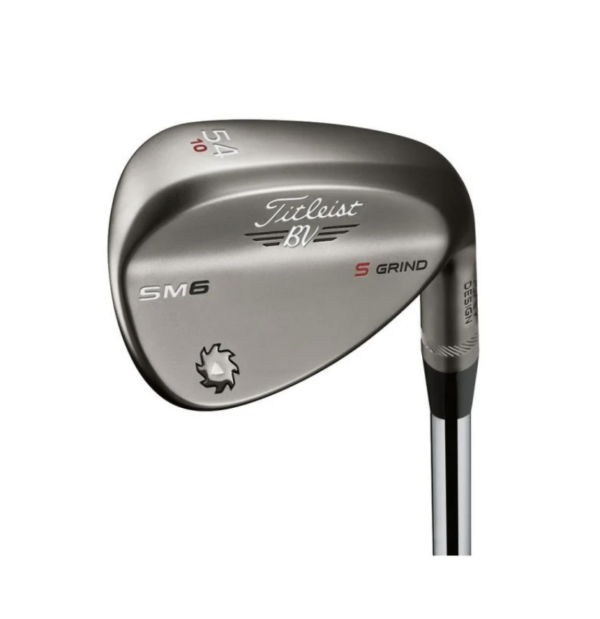
Titleist Vokey SM6 Wedge
$24.99 -
Hot
Choosing the right wedge
Wedges are defined by two numbers: loft and bounce. Loft controls trajectory and distance. Most players carry a pitching wedge (around 44–48°), a gap or approach wedge (around 50–52°), a sand wedge (around 54–56°), and often a lob wedge (58° or higher) for the shortest, highest shots around the green. The key to building an effective set is gapping. This can be done by spacing your wedges roughly 4–6° apart so you're not left with an awkward yardage between two clubs that do the same job.
Bounce matters just as much as loft, especially around the greens. Higher bounce (10° and above) sits the leading edge up off the turf, which helps in soft sand, wet conditions, or if you tend to take a deeper divot. Lower bounce (8° and below) sits flatter to the ground, suiting firmer turf, tighter lies. If you're unsure, a mid-bounce wedge (around 10–12°) is the safest all-round choice.
New or secondhand ? What actually changes
A secondhand wedge performs exactly the same as the same model bought new, the loft, bounce, and groove design don't change with a previous owner. What does change is groove wear, which affects spin more on a wedge than almost any other club in the bag. That's exactly why we check it carefully and grade every wedge rather than just photographing and listing it. You can identify how spent the grooves are by looking at the 'Face' aspect of the Club Grading Index
Buying secondhand, with confidence.
As with every club on Green Grade Golf, our wedges are scored using our own Club Grading Index assessing the sole and back, face, shaft, and grip, each out of 10, for a total out of 40. That score maps to a clear quality tier: Pristine, Elite, Performer, or Reliable. So our customers always know the condition, including how much groove wear to expect, before you buy.
Common questions:
How many wedges do I need, and what lofts?
Most players carry two to three: typically a gap or approach wedge (50–52°), a sand wedge (54–56°), and a lob wedge (58°+) if you play a lot of short-game shots. Space them 4–6° apart so your distances don't overlap.
What bounce should I choose?
Higher bounce suits soft sand, wet turf, and players who take a divot; lower bounce suits firm turf and tight lies. A mid-bounce wedge (10–12°) works well for most players and conditions.
Are secondhand wedges as good as new ones?
Yes for the performance of loft, bounce, and design. The one thing to watch is groove wear, since worn grooves reduce spin, which is exactly what our Club Grading Index checks and scores.
Not sure which one you need?
Ask Caddie.
If you're unsure which wedges to add to your set, Caddie can help. Tell it your current setup, typical lies, and where you're losing shots around the green, and it'll filter our current stock to the wedges that actually fit. Pointing you toward graded options that match your game and your budget.