
Blade vs Mallet Putters: Which Should a Beginner Choose?
Choosing a putter should be simple. Then you walk into a golf shop and find dozens of shapes and sizes on the shelf — some barely bigger than the ball, others that look like they belong on a spaceship.
Almost every putter on the market falls into one of two families: blade putters and mallet putters. Here’s what separates them, and which is the better starting point if you’re new to the game.
At a Glance
| Blade Putter | Mallet Putter | |
|---|---|---|
| Head shape | Small, traditional | Larger, often shaped |
| Weight distribution | Compact | Spread further from centre |
| Forgiveness | Lower | Higher |
| Alignment aids | Minimal | Usually extensive |
| Feel | Responsive, direct | Stable, dampened |
| Best suited to | Golfers who value feel and control | Beginners and those wanting consistency |
Our short answer: most beginners get on better with a mallet. But putting is personal, and a blade is never the wrong choice if it’s the one you trust over a three-footer.
What Is a Blade Putter?
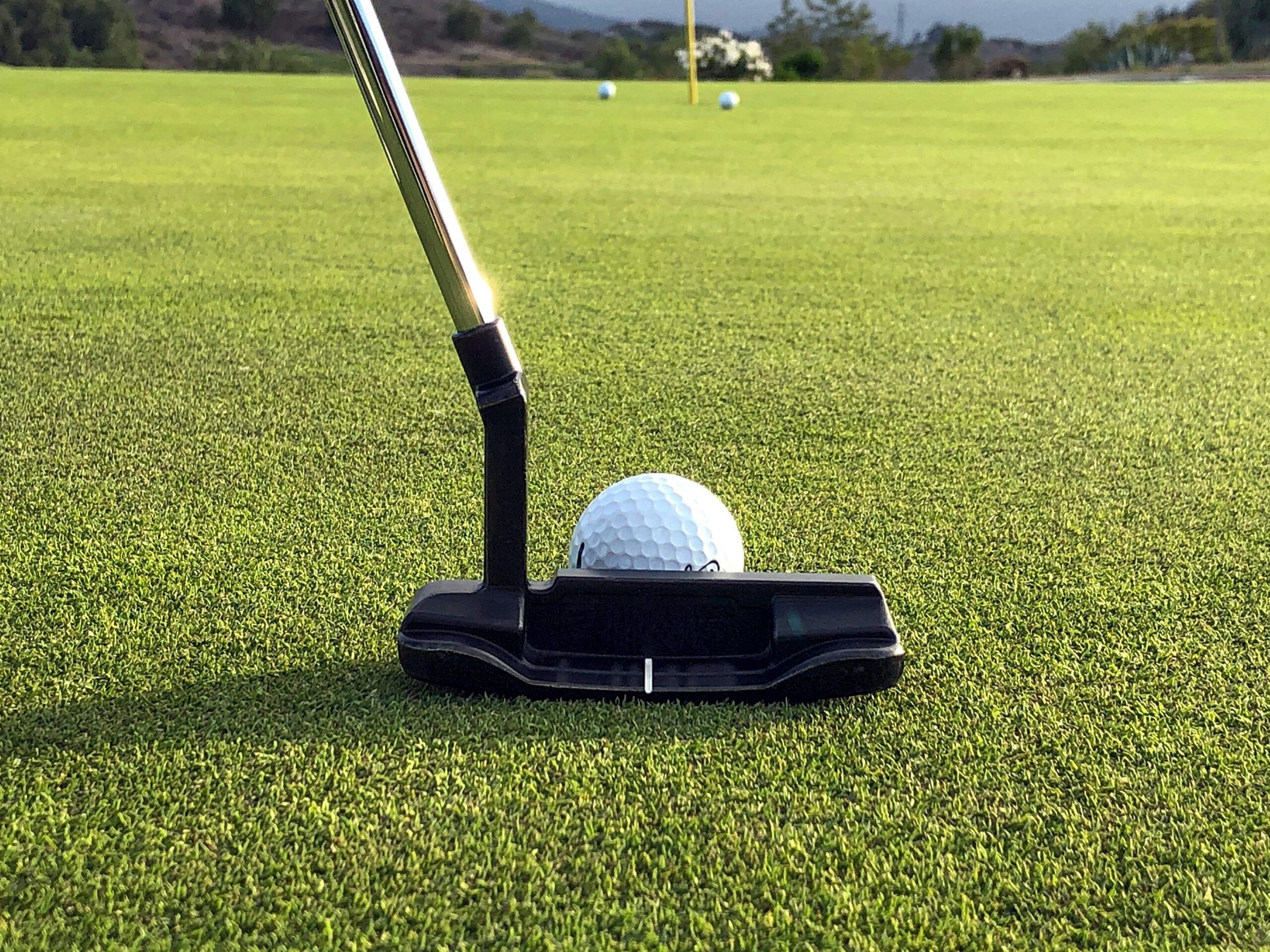
The blade is golf’s original putter design: a small, narrow head with a simple profile. It’s been a fixture on tour and in golf bags for decades, and it remains popular with players of every ability.
Its main appeal is feel. The compact head gives clear feedback at impact, and many golfers simply prefer the look of a slim putter behind the ball. The trade-off is stability — because the head is smaller and the weight more centralised, a blade tends to twist more on a strike that misses the centre of the face. For a golfer still grooving a consistent stroke, that can be costly.
What Is a Mallet Putter?
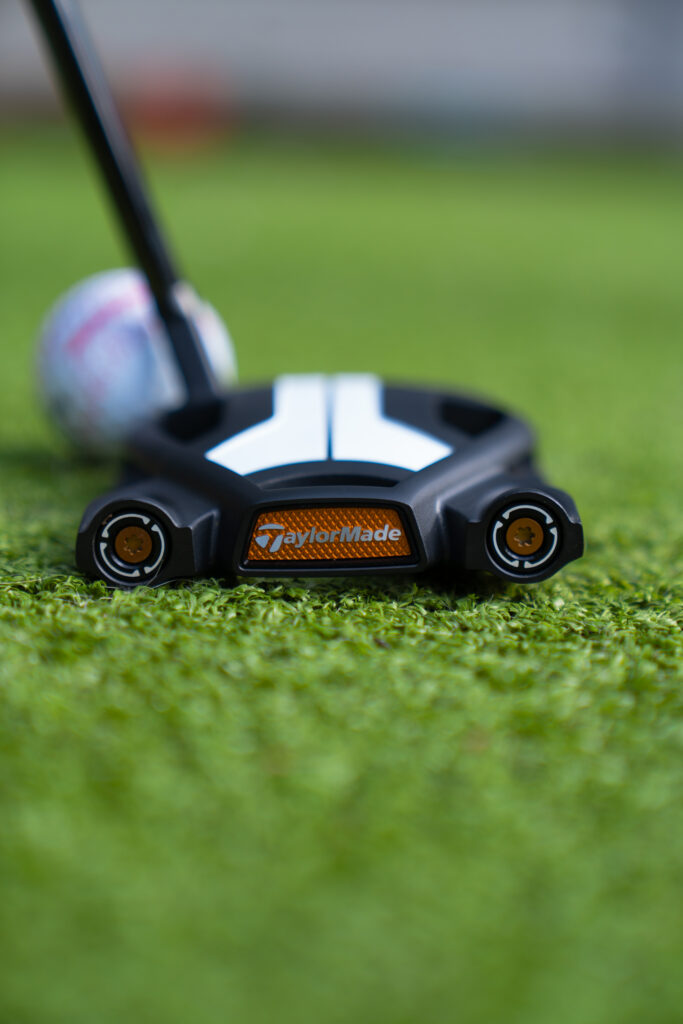
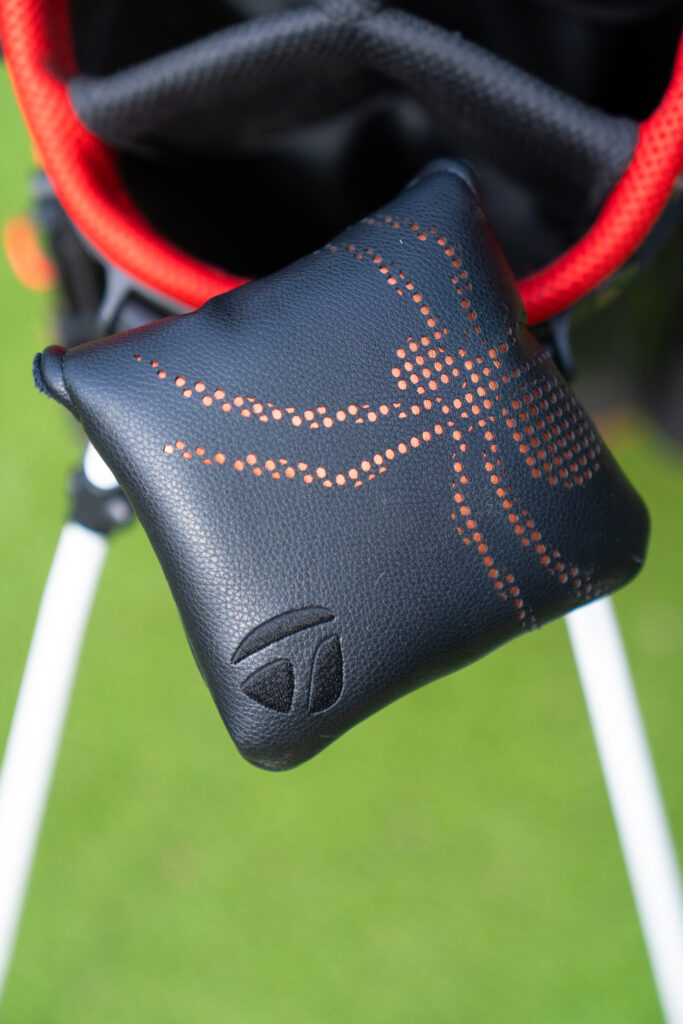
Mallets take the opposite approach: a larger head, often with an unconventional shape, that lets manufacturers push weight further from the centre. In practical terms, that means the putter resists twisting more effectively when contact isn’t perfectly struck — which is exactly the kind of forgiveness a developing golfer benefits from.
Forgiveness, Explained Simply
You’ll hear the word “forgiveness” throughout golf equipment marketing, but the idea is straightforward: a forgiving club limits the damage done by an imperfect strike.
Hit a putt slightly off-centre with a forgiving head, and it resists twisting — helping the ball hold its intended line and speed. This resistance to twisting is often described using MOI (Moment of Inertia). You don’t need to understand the physics to make use of it; the only thing worth remembering is:
Higher MOI = more resistance to twisting on off-centre strikes.
Because mallets can position more weight away from the centre of the head, they generally offer a higher MOI — and more forgiveness — than blades.
Which Is Easier to Aim?
This is another area where mallets tend to help beginners. Their larger top surface gives manufacturers room for bolder, clearer alignment aids, making it easier to know exactly where the putter face is pointing at address. Blades, with far less real estate to work with, usually offer only simple alignment markings.
If you regularly find yourself second-guessing your aim over a putt, a mallet’s larger sightlines can make a real difference.
So Why Choose a Blade at All?
Because forgiveness isn’t the only thing that matters. Confidence over the ball counts for a great deal in putting, and some golfers simply feel sharper standing over a smaller, cleaner head. A putter that’s technically more forgiving is of little use if you don’t trust it.
Stroke type plays a role too — some golfers putt on a straighter path, others with more of an arc, and different head and neck designs can suit each style. As a beginner, though, we’d recommend not overthinking this at the outset. Prioritise comfort, alignment and consistency, and let stroke mechanics come later.
Our Recommendation for Beginners
For most golfers starting out, we’d lean towards a mallet putter, for four reasons:
- Greater stability through impact
- More forgiveness on off-centre strikes
- Larger, clearer alignment aids
- The confidence that often comes with a larger head
That said, there’s one rule that overrides all of this: if you putt better with a blade, use a blade. Equipment choice isn’t about following a general recommendation — it’s about finding what actually helps you hole more putts.
Should You Buy a Putter Second-Hand?
Putters are one of the best clubs in the bag to buy pre-owned. Unlike wedges, where worn grooves genuinely affect performance, a well-made putter can perform perfectly well for many years — cosmetic wear has little bearing on how it rolls the ball.
Before buying a used putter, check that:
- The face shows no significant damage
- The shaft is straight, with no bends
- The head is secure and not loose on the shaft
- The grip is still in usable condition
- The length suits your height and setup
Most importantly: make sure you like it. Where possible, test a few putts before committing — a five-year-old putter that gives you confidence will usually outperform this year’s model that doesn’t feel right in your hands.
Do You Need to Spend a Lot?
No. Premium putters can offer excellent materials and manufacturing, but a higher price tag won’t fix three-putts on its own — particularly for beginners, where technique, green-reading and distance control matter far more than the putter itself.
Rather than asking “what’s the most expensive putter I can afford?”, ask “which putter feels comfortable and helps me start the ball on line, consistently?” That question will serve you much better.
The Green Grade Golf Verdict
- Choose a blade if you prefer a smaller, traditional head and want maximum feedback from the face.
- Choose a mallet if you want more stability, forgiveness and help with alignment.
- Our beginner pick: a mallet — for the stability and confidence it tends to bring while you’re still building a consistent stroke.
But don’t take our word over your own hands. Try both if you can, and trust whichever one you feel most confident standing over.
At Green Grade Golf, we believe beginner equipment should make the game simpler, not more complicated. The best putter isn’t the newest or most expensive — it’s the one you actually trust to hole the putt.
FAQs
Are mallet putters more forgiving than blades?
Generally, yes. Their larger heads allow weight to sit further from the centre, increasing stability on off-centre strikes.
Do professional golfers use mallet putters?
Yes — both designs are used at the highest level of the game. Mallets aren’t purely a “beginner” putter.
Can a beginner use a blade putter?
Absolutely. If you feel comfortable and putt consistently with one, there’s no reason to avoid it.
Is buying a second-hand putter worth it?
In most cases, yes. Putters remain usable for many years, making a good-quality pre-owned model an excellent way to avoid paying full price for new.
4 Comments
Comments are closed.
Wpbingo
“This skincare line has completely changed how I view beauty. Instead of chasing quick fixes, I now focus on consistency and care. Over time, my skin has become healthier, more even-toned, and naturally glowing. It’s skincare that truly supports long-term skin wellness.”
Wpbingo
“This brand perfectly understands that healthy skin is built over time. Instead of following short-lived trends, the products focus on proven ingredients and thoughtful formulations. I love how simple yet effective the routine feels. My skin looks more natural, fresh, and radiant without feeling overloaded.”
Wpbingo
“It’s rare to find a brand that truly prioritizes skin health. The transparency about ingredients and the thoughtful product selection make me feel confident using these products daily. My skin feels well cared for, not stressed or overwhelmed.”
Wpbingo
“I appreciate skincare that doesn’t overcomplicate things. These products fit perfectly into a simple routine while still delivering visible results. My skin looks fresher, clearer, and more radiant without needing too many steps.”